How Much Does an Estate Appraisal Cost in 2026? Complete Guide
Written By: AnDel Appraisals Staff
Fact Checked By: Ray Anderson (Founder)
Here is the thing about settling an estate valuations. You need to know what everything is worth. The court and the IRS both require it. Without a proper estate appraisal, you cannot close probate, you cannot distribute assets fairly, and you cannot file the final tax return.
So the question is real: how much is this going to cost??
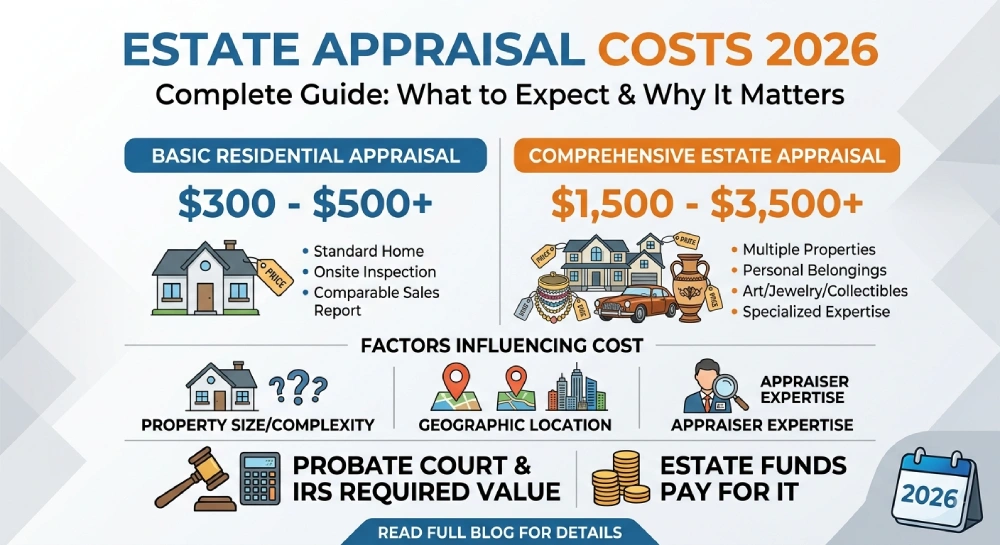
Here is the short answer. A basic estate appraisal for a single-family home typically runs $300 to $500. But comprehensive appraisals covering multiple properties, personal belongings, and specialized assets can cost $1,500 to $3,500 or more.
What Influences the Cost
The final number depends on a few things and types of real estate appraisals.
- Size and complexity. A simple estate with one house and standard furnishings costs less than a large estate with multiple properties, a business, or rare collectibles.
- Type of assets. Real estate appraisals generally cost $300 to $500 for a standard home . Personal property appraisals for art, jewelry, and antiques can run higher, especially if specialists are needed.
- Geographic location. Appraisers in metropolitan areas or remote regions often charge more due to travel and local market conditions.
- Specialized expertise. If you need a probate appraisal for a historic property, a commercial building, or a rare collection, expect to pay a premium for specialized knowledge.
- Timing. Rush requests for tax deadlines or court hearings typically cost extra.
Types of Appraisals and Their Cost
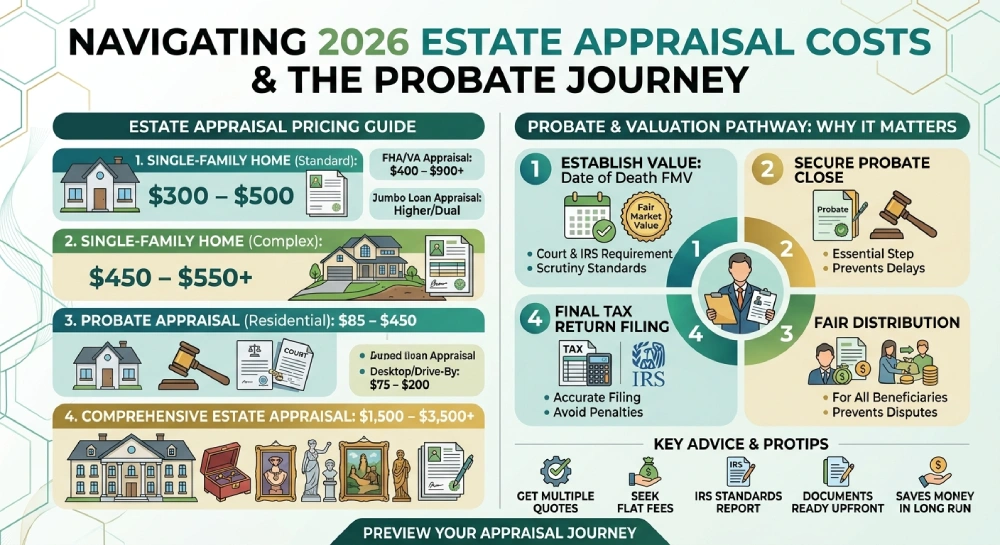
| Type of Appraisal | Typical Cost Range |
| Single-Family Home (Standard) | $300 – $500 |
| Single-Family Home (Complex) | $450 – $550+ |
| Probate Appraisal (Residential) | $85 – $450 |
| Comprehensive Estate Appraisal | $1,500 – $3,500+ |
| FHA/VA Appraisal | $400 – $900+ |
| Jumbo Loan Appraisal | Higher; may require a second appraisal |
| Desktop or Drive-By Appraisal | $75 – $200 |
Keep in mind, these are averages. A rural property with limited comparable sales or a large estate with multiple properties can push costs higher .
What the Fee Covers
An estate planning appraisal fee is not just for showing up. It covers the appraiser’s expertise and licensing. It covers the onsite inspection of the property. It covers research into recent comparable sales. And it covers the preparation of a detailed written report.
For federal estate tax purposes, the report must meet IRS standards and withstand scrutiny .
Who Pays for the Appraisal
In most cases, the estate pays for the appraisal. The executor or administrator handles the cost from estate funds before distributions to beneficiaries. For a home purchase, the buyer typically pays. For a refinance, the homeowner pays . For an estate settlement, the estate covers the expense.
Probate Appraisal vs Standard Appraisal
A probate appraisal is not the same as a standard home appraisal. It establishes fair market value as of the date of death for legal proceedings and tax purposes . It must meet court requirements and often faces stricter scrutiny from the IRS.
A standard home appraisal, on the other hand, is typically for a mortgage or refinance and focuses on current market value for lending purposes .
How to Get the Best Value
Get multiple quotes. Ask about the appraiser’s experience with estates. Request a flat fee quote if possible. Be clear about the scope of work. Provide as much documentation as you can upfront .
A thorough estate appraisal might cost more upfront, but it saves money later by preventing disputes, reducing tax penalties, and ensuring a clean probate process.

When You Need a Formal Estate Appraisal vs. an Informal Estimate
An informal estimate is what you get from a real estate agent or some online calculator. It’s a guess — a ballpark number based on recent sales and what the market’s doing. It’s quick, usually free, and gives you a rough idea of what a property might sell for.
A formal estate appraisal is a whole different ballgame. It’s a legal document done by a licensed appraiser who actually goes out to the property, walks through it, checks out comparable sales, and uses proper valuation methods. The appraiser takes an oath to give you an honest, unbiased number. The IRS, the probate court, and all the beneficiaries are counting on this document to make important decisions.
You need a formal estate appraisal. Courts and the IRS don’t care about some agent’s opinion or a website’s guess. They want a licensed professional’s certified value.
Conclusion
An estate appraisal costs $300 to $3,500 or more, depending on the size and complexity of the estate. A standard residential probate appraisal typically runs $300 to $500. Comprehensive appraisals covering multiple asset types can run significantly higher.
Frequently Asked Questions
What is the average cost of an estate appraisal in 2026?
The average cost ranges from $300 to $500 for a standard home appraisal. Comprehensive estate appraisals covering multiple properties and personal belongings range from $1,500 to $3,500 or more.
How much does a probate appraisal cost?
A probate appraisal for residential property typically costs $85 to $450, with most falling between $300 and $800 depending on the property’s complexity and location.
What factors affect estate appraisal cost?
Key factors include the number and type of assets, geographic location, the appraiser’s expertise, time sensitivity, and the scope of work required.
Do I need an estate appraisal for tax purposes?
Yes. The IRS requires an estate appraisal to establish fair market value as of the date of death for federal estate tax purposes. The appraisal must meet IRS standards.
How long is an estate appraisal valid?
Usually six months to a year — depends on what you need it for. For IRS estate tax filings, it has to be the value on the exact date of death. If the estate drags on, the executor might have to get it updated, especially if the market’s bouncing around like it is in 2026.
Who hires the appraiser for an estate?
The executor or administrator does. That’s their job. They gotta make sure the appraisal meets court and IRS rules. Beneficiaries can throw in a suggestion, but the executor makes the final call, and they have to do what’s best for the estate and everyone involved.
Can I use the same appraiser for real estate and personal property?
Probably not. Real estate appraisers are licensed for property. Personal property appraisers handle stuff like art, jewelry, antiques, and collectibles different credentials, different expertise.
What happens if the IRS disagrees with the estate appraisal?
They might come back with their own number or ask for more documentation. That can trigger an audit, stall the whole estate settlement, and pile on penalties and interest. A clean, well-documented appraisal from a qualified pro goes a long way toward keeping the IRS off your back.
Can I contest an estate appraisal if I disagree with the value?
Yeah, you can. Beneficiaries have the right to hire a second appraiser for a fresh opinion. If the two values are way off, the estate may need to negotiate or even end up in court. The executor usually decides whether to go with the original or get a second look.
Our Services

Pre-Listing & FSBO Appraisals

Pre-Purchase Appraisals – AnDel Appraisal